Updated for 2026 — This article has been reviewed and updated with the latest recommendations.
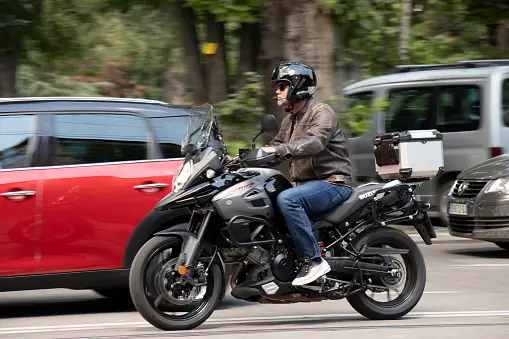
A motorcycle dash cam can save you thousands in an insurance dispute, capture evidence of dangerous drivers, and document your best rides along the way. Unlike car dash cams, motorcycle cameras need to handle vibration, weather exposure, and challenging mounting situations. Not every action camera or car dash cam translates well to two-wheel use.
Why Motorcycle Riders Need a Dash Cam
Motorcyclists are disproportionately blamed in accidents, even when the other driver is at fault. A dash cam provides objective evidence that can prove your case to insurance companies or in court. Beyond legal protection, footage of dangerous drivers can be reported to authorities. And on the fun side, a good camera captures your favorite roads and riding moments without having to fumble with a phone.
Innovv K5
The Innovv K5 is purpose-built for motorcycles. It is a dual-channel system with front and rear cameras connected to a separate recording unit that mounts under the seat or in a fairing pocket. Both cameras record in 4K at 30fps or 1080p at 60fps.
The cameras are small and weatherproof, designed to mount permanently on the bike. The system is hardwired to the motorcycle battery with an automatic power-on feature, so it starts recording every time you turn the key. GPS logging records your speed and route. WiFi connectivity lets you transfer footage to your phone.
The Innovv K5 is the most motorcycle-specific option on the market and the one we recommend for riders who want a set-it-and-forget-it system. Check Latest Price
Sena 50C
The Sena 50C combines a Bluetooth intercom system with an integrated 4K camera. If you already want or need a communication system, the 50C eliminates the need for a separate camera mount. The camera sits on the side of the helmet and captures your forward view.
Video quality is good for a helmet-mounted camera, though it does pick up more vibration than a bike-mounted system. The real value is convenience. You get intercom functionality, music streaming, and a dash cam in one device. Battery life is the main limitation; the camera drains the battery faster than intercom-only use. Check Latest Price
GoPro Hero 13 Black
The GoPro is not a dedicated dash cam, but it remains one of the most popular choices for motorcycle use. The Hero 13 Black shoots stabilized 5.3K video, handles vibration well with its HyperSmooth stabilization, and is waterproof without a case. Mounting options are endless with the GoPro ecosystem of mounts.
The downsides are battery life (about 90 minutes at high resolution) and the fact that it does not loop record by default like a true dash cam. You need to manually manage storage. For rides where you want high-quality footage, the GoPro is hard to beat. For always-on dash cam duty, a dedicated system is better. Check Latest Price
Viofo MT1
The Viofo MT1 is a budget-friendly dual-channel motorcycle dash cam. Front and rear cameras connect to a central recording unit. Video quality is 1080p from both cameras simultaneously. It includes GPS, WiFi for phone connectivity, and loop recording.
The cameras are compact and weatherproof. Build quality is a step below the Innovv K5, but the price is roughly half. For riders who want dual-camera coverage without breaking the bank, the MT1 delivers solid value. Check Latest Price
What to Look For
- Weather resistance: IP67 rating minimum. The camera will see rain, dust, and temperature extremes.
- Vibration handling: Electronic stabilization matters on a motorcycle. Without it, footage is often unusable.
- Loop recording: The camera should automatically overwrite old footage when the card is full, so it is always recording.
- GPS logging: Records your speed and location, which can be critical evidence in a dispute.
- Low-light performance: Night riding footage is useless if the camera cannot handle low light conditions.
- Mounting system: The mount needs to be secure enough to handle highway speeds and rough roads without shifting.
Helmet Mount vs Bike Mount
Helmet-mounted cameras capture what you see, including head checks and mirror glances. This can be valuable evidence showing you checked before a lane change. The downside is vibration, weight on your neck, and the legal gray area in some jurisdictions about helmet-mounted accessories.
Bike-mounted cameras provide a steadier image and can be hardwired for unlimited recording time. Dual-channel systems cover both front and rear. The trade-off is that they only show what is directly in front of and behind the bike, not where you are looking.
The ideal setup is a hardwired dual-channel system on the bike for always-on dash cam duty, supplemented by a helmet camera when you want ride footage or extra angles. But if you only get one, a bike-mounted dual-channel system gives you the most useful safety coverage.
Storage and Management
Dash cams chew through microSD cards. Use a high-endurance card rated for continuous recording. Samsung PRO Endurance and SanDisk High Endurance cards are designed for this purpose. A 256GB card gives you roughly 12 to 24 hours of footage depending on resolution settings. Format the card monthly to prevent file system errors.
Get in the habit of saving important footage to your phone or computer before it gets overwritten. Most modern dash cams make this easy with WiFi transfer to a phone app.